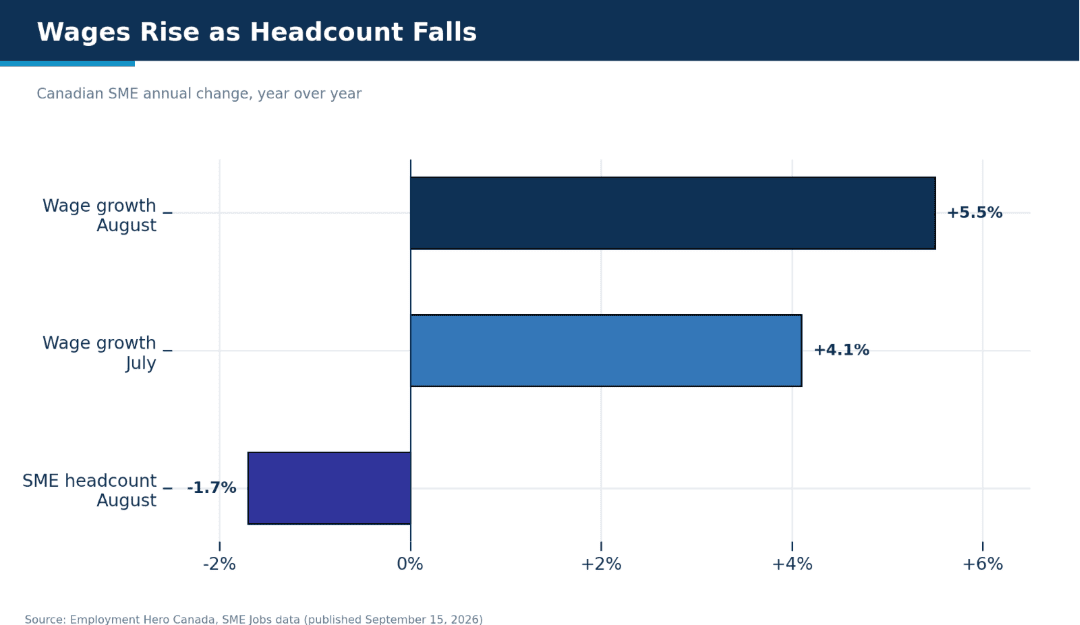
Canadian small and medium-sized businesses are entering the final quarter of 2026 with a changing labor market.. According to the latest Employment Hero Jobs Report SME headcount declined by 1.7% year-over-year in August, marking the second consecutive month of negative annual growth, while wages increased by 5.5%, the highest annual growth recorded in the report’s 13-month reporting window.
The Report describes this divergence as a sign that SMEs are becoming more deliberate about workforce growth while continuing to invest in talent. The findings point to an environment where retention, productivity and workforce planning are becoming increasingly important as businesses head into Q4.
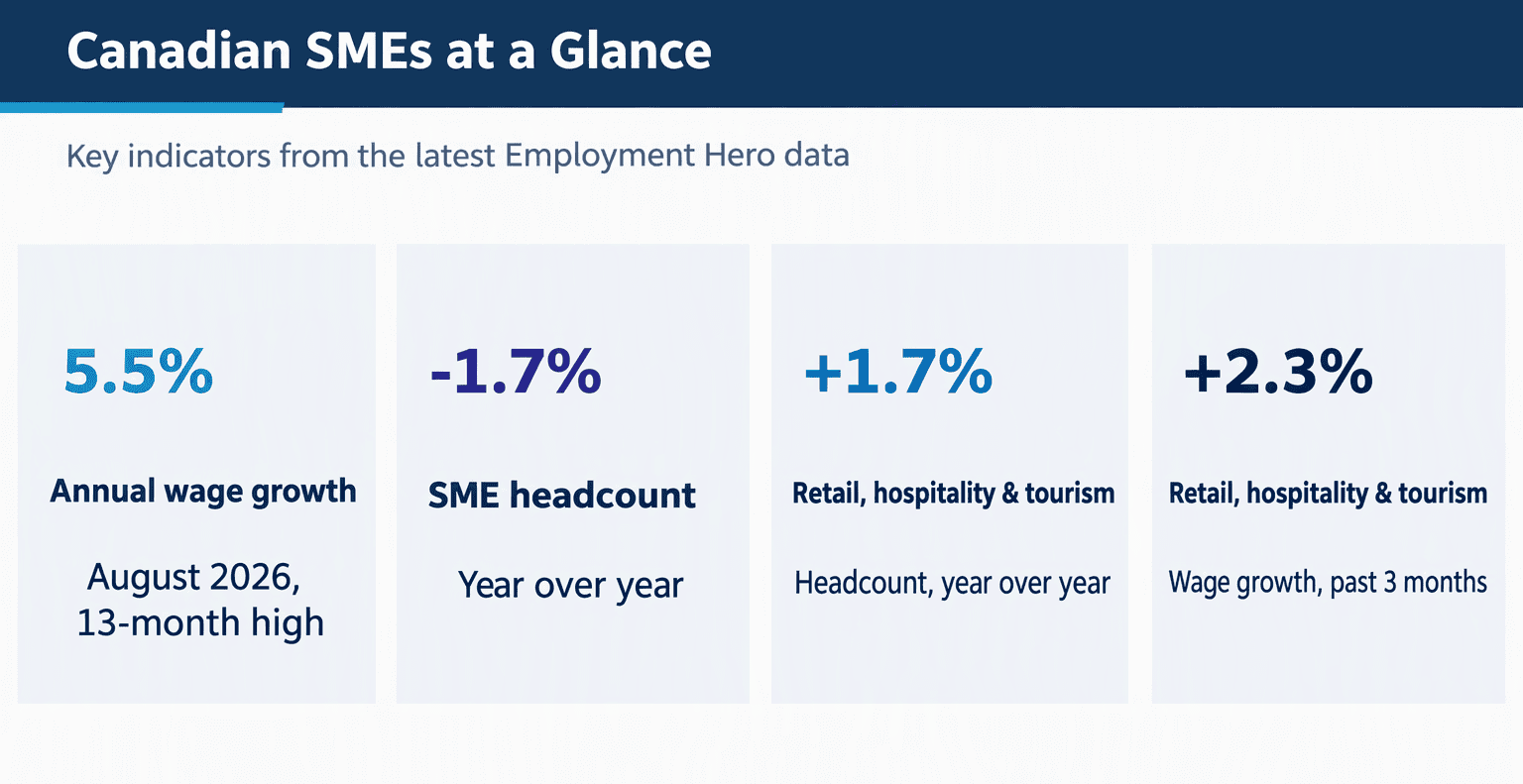
Canadian SMEs continue to demonstrate their commitment to attracting and retaining skilled talent. According to the latest Employment Hero data, wages increased by 5.5% year-over-year in August, marking the strongest annual wage growth recorded during the report’s 13-month reporting period. This increase follows a wage growth rate of 4.1% in July and reflects employers’ willingness to invest in their workforce despite a more measured pace of hiring.
At the same time, SME headcount declined by 1.7% compared to the previous year. The combination of rising wages and softer employment growth suggests many organizations are emphasizing workforce stability, employee engagement and productivity while carefully evaluating new hiring opportunities. As Chris Pinkerton, Managing Director of Employment Hero Canada, notes, SMEs may be more cautious about adding headcount, but they remain committed to paying for the talent they need.
Regional Labour Market Trends Highlight Local Opportunities
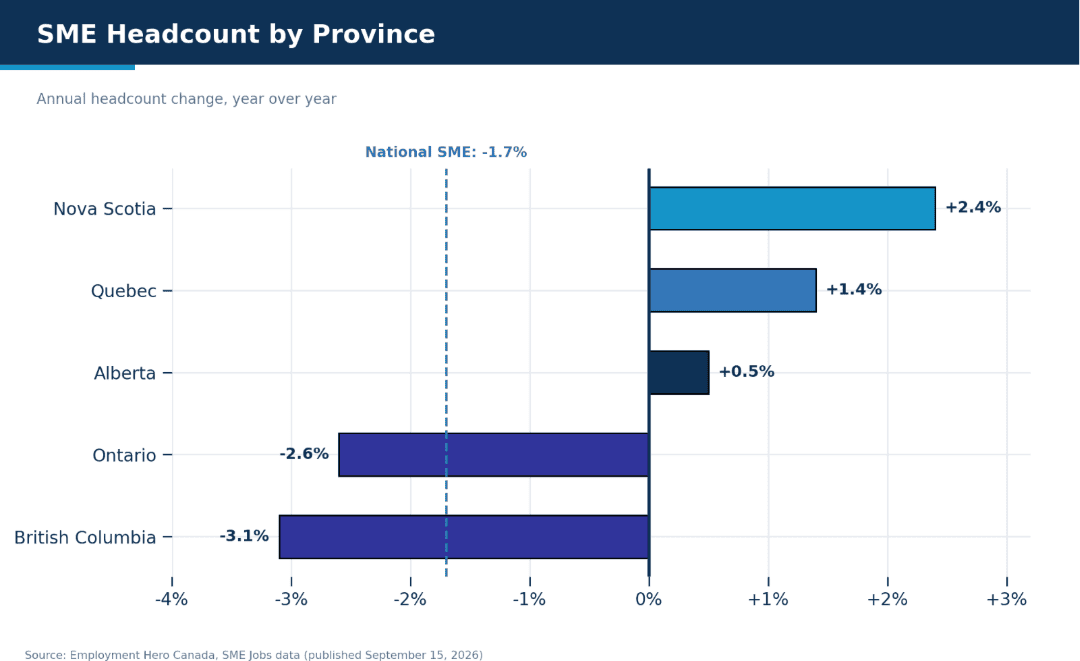
Workforce conditions continue to vary significantly across Canada, highlighting the importance of regional market insights when developing hiring and retention strategies. Nova Scotia led annual SME employment growth with a 2.4% increase in headcount, followed by Quebec at 1.4% and Alberta at 0.5%. These provinces continue to present opportunities for employers looking to expand and attract talent in growing labour markets.
In comparison, British Columbia and Ontario recorded year-over-year declines of 3.1% and 2.6% respectively. While hiring activity has moderated in these regions, opportunities remain for organizations that take a targeted approach to recruitment and workforce planning. The findings reinforce that local market conditions often tell a different story than national averages, making regional awareness increasingly valuable for employers making strategic talent decisions.
Customer-Facing Industries Continue to Create Opportunities
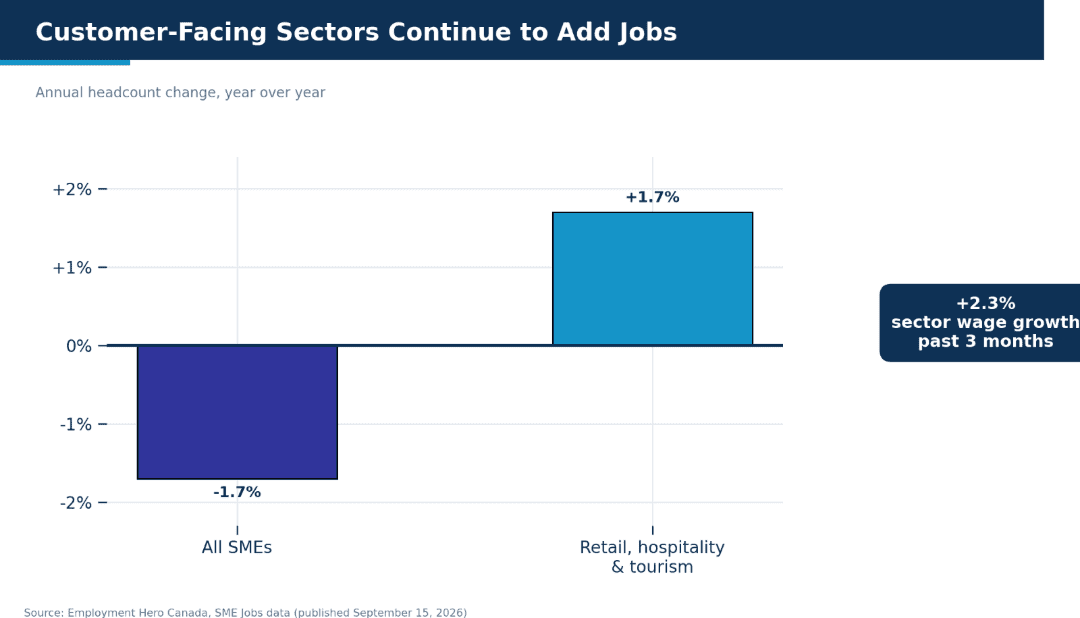
Several sectors continue to demonstrate positive momentum despite softer overall employment growth. Retail, hospitality and tourism SMEs increased headcount by 1.7% year-over-year, reflecting ongoing demand for customer-facing talent and the importance of service-driven industries within Canada’s economy.
Wage growth within these sectors has also remained strong, increasing by 2.3% over the past three months. This trend suggests employers are continuing to invest in attracting and retaining employees who play a critical role in delivering customer experiences and supporting business growth. As organizations prepare for seasonal demand and year-end activity, these industries remain an important source of employment opportunities across the country.
Why This Matters for Employers
The latest data points to a labour market that is becoming increasingly intentional rather than stagnant. Many organizations are shifting their focus toward workforce optimization, employee retention and strategic hiring decisions that align with long-term business objectives. Rather than pursuing rapid growth, employers are investing in the talent and capabilities that will create the greatest impact.
Competitive compensation continues to play a major role in attracting and retaining skilled professionals. At the same time, organizations are recognizing the value of workforce planning, employee development and productivity initiatives as they build resilient teams capable of adapting to changing market conditions. For business leaders, the current environment presents an opportunity to strengthen their workforce while positioning their organizations for future success.
A More Strategic Labour Market Emerges
The combination of strong wage growth and modestly lower headcounts reflects a broader shift in how businesses approach talent management. Employers appear to be focusing on quality over quantity by investing in existing employees while carefully selecting new hires who can support growth and drive meaningful outcomes.
This approach reflects increasing confidence in strategic workforce planning and highlights the growing importance of retention, skill development and organizational agility. Businesses that successfully balance competitive compensation with thoughtful hiring practices are likely to be better positioned to navigate future labour market challenges and opportunities.
Three Takeaways for Business Leaders
Hire with Local Market Insight
Regional differences remain an important factor in workforce planning. Understanding local labour market dynamics can help employers identify talent opportunities, anticipate hiring challenges and develop more effective recruitment strategies that align with regional conditions.
Make Retention a Competitive Advantage
With wage growth reaching a 13-month high, investing in employees has become an increasingly important differentiator. Organizations that offer competitive compensation, meaningful development opportunities and positive workplace experiences will be better positioned to retain their top performers and reduce turnover.
Focus on High-Impact Hiring
As hiring becomes more intentional, employers are placing greater emphasis on roles that contribute directly to productivity, customer success, and long-term growth. Strategic hiring decisions can help organizations maximize the value of every addition to their workforce while supporting broader business goals.
Source: Read the full article here:: Employment Hero, Canadian SMEs Enter Small Business Month with Softer Employment and Rising Wages, New Employment Hero Data Shows, September 15, 2026.